
Choosing between porcelain vs ceramic kitchen tile is not always easy. Many homeowners worry about picking the wrong material and spending money on a tile that may not match their budget, lifestyle, or long-term needs. Since both options look similar, understanding their real differences is important before starting a kitchen renovation.
After reviewing how these materials perform in everyday kitchens, one thing is clear: the best choice depends on how you use your space. This guide compares porcelain and ceramic kitchen tile based on durability, water resistance, cost, lifespan, and overall value. If you’re still exploring materials, our guide to choosing the right kitchen flooring can help narrow down your options.
Porcelain vs Ceramic Kitchen Tile- Quick Answer:
If you are choosing between porcelain vs ceramic kitchen tile, porcelain is usually the better option for kitchen floors because it is more durable, more water-resistant, and lasts longer. Ceramic tile is often the better choice for backsplashes and budget-friendly projects because it costs less and is easier to install.
Key Takeaways
- Porcelain tile is more durable and water-resistant than ceramic tile.
- Ceramic tile is usually more affordable and easier to install.
- Porcelain is often the better choice for kitchen floors.
- Ceramic is commonly used for backsplashes and decorative applications.
- Homeowners planning long-term renovations may benefit more from porcelain’s durability.
- The best choice depends on your budget, lifestyle, and kitchen usage.
Quick Comparison Table
| Feature | Porcelain Tile | Ceramic Tile |
|---|---|---|
| Durability | Excellent | Good |
| Water Resistance | Excellent | Good |
| Cost | Higher | Lower |
| Installation | More Difficult | Easier |
| Lifespan | Longer | Shorter |
| Best Use | Kitchen Floors | Backsplashes & Walls |
For a broader look at popular materials, see our overview of kitchen floor options for different needs and budgets.
Pros and Cons of Porcelain and Ceramic Tile
| Tile Type | Pros | Cons |
|---|---|---|
| Porcelain Tile | Durable, water-resistant, long-lasting | Higher cost, harder to install |
| Ceramic Tile | Affordable, easy to install, many styles | Less durable, absorbs more moisture |
What Is Porcelain Tile?
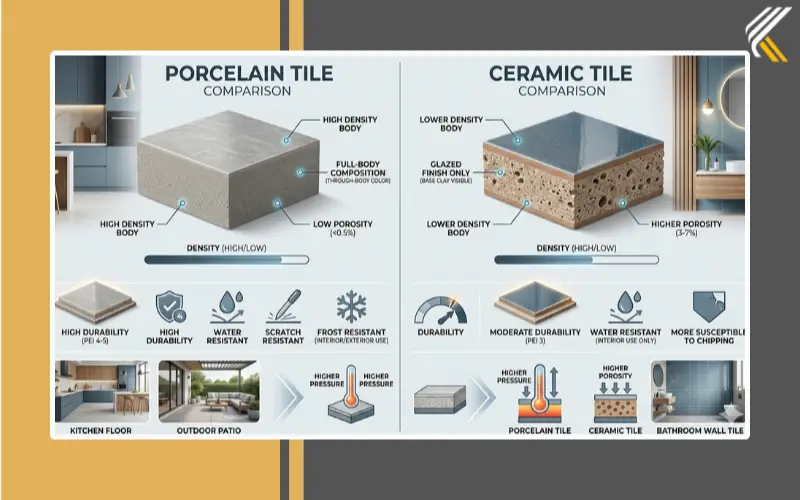
Porcelain tile is made from refined clay and fired at very high temperatures. This creates a dense and durable material that resists moisture and wear. Because porcelain absorbs less than 0.5% water, it is an excellent choice for kitchen floors and other high-traffic areas.
What Is Ceramic Tile?
Ceramic tile is also made from clay but fired at lower temperatures. This makes it slightly softer and easier to cut during installation. Ceramic tile is commonly used for kitchen backsplashes, walls, and budget-friendly renovation projects.
Porcelain vs Ceramic Tile: Key Differences
-
- Durability: Porcelain tile is generally denser and more durable than ceramic tile. It resists chips, scratches, and wear better over time.
-
- Water Resistance: Porcelain absorbs less water than ceramic, making it a better choice for kitchens where spills happen regularly.
-
- Cost: Ceramic tile is usually less expensive than porcelain tile. It is often the preferred option for homeowners working within a budget.
-
- Installation: Ceramic tile is easier to cut and install. Porcelain may require specialized tools and professional installation.
-
- Appearance: Both materials are available in many colors, patterns, and finishes. Modern manufacturing allows them to mimic natural stone, wood, and marble.
Water Absorption Rate
One of the biggest differences between porcelain and ceramic tile is moisture resistance.
| Tile Type | Water Absorption Rate |
|---|---|
| Porcelain Tile | Less than 0.5% |
| Ceramic Tile | More than 0.5% |
For kitchens that experience frequent spills, porcelain offers better long-term protection. You can also compare other water-resistant flooring choices designed for moisture-prone kitchens.
Best Uses for Porcelain Tile
Porcelain tile works best in:
-
- Kitchen floors
-
- Busy family kitchens
-
- Homes with pets
-
- High-traffic areas
-
- Long-term renovations
Its durability and moisture resistance make it a smart investment. Homeowners comparing premium materials may also want to explore luxury vinyl flooring solutions for kitchens.
Best Uses for Ceramic Tile
Ceramic tile works well for:
-
- Kitchen backsplashes
-
- Accent walls
-
- Budget-friendly remodels
-
- DIY projects
Its lower cost and easier installation make it a practical option.
Porcelain vs Ceramic Tile for Kitchen Floors
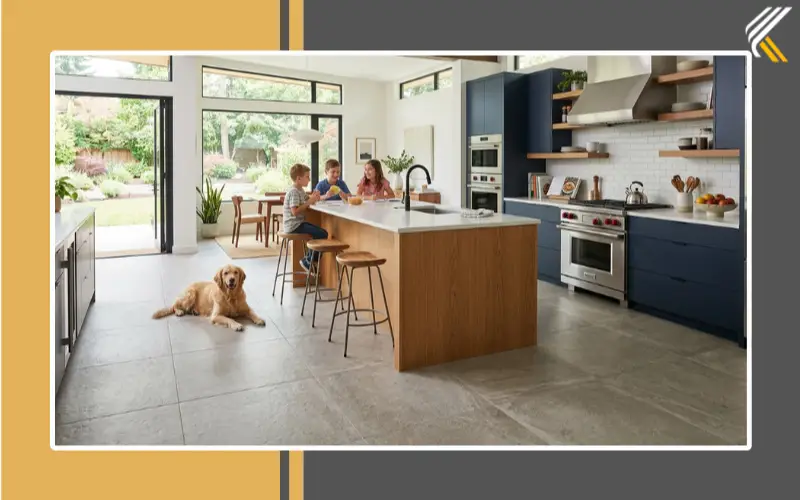
When comparing porcelain vs ceramic tile for kitchen floors, porcelain is usually the better choice. Kitchen floors experience daily foot traffic, spills, and dropped objects. Porcelain handles these challenges better because of its dense structure and superior durability.
Porcelain vs Ceramic Tile for Kitchen Backsplashes
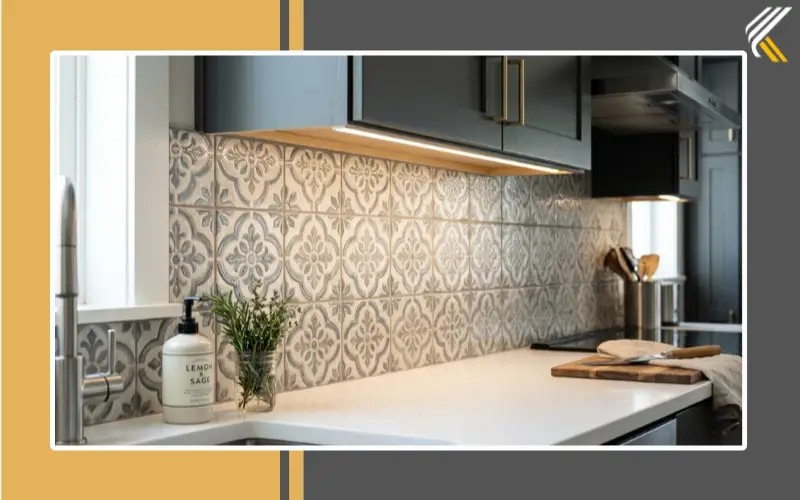
For backsplashes, ceramic tile is often the preferred option. Since backsplashes do not experience heavy wear, ceramic provides a cost-effective way to achieve a stylish kitchen design.
Cost and Long-Term Value
Ceramic tile usually costs less upfront. Porcelain tile typically costs more because it is denser and harder to manufacture. For homeowners focused on upfront savings, ceramic tile is often the more affordable option. Porcelain tile may offer better long-term value because it typically lasts longer. If affordability is your top priority, check out our guide to budget-friendly flooring ideas for kitchens.
Which Tile Lasts Longer?
Porcelain tile generally lasts longer because it is more resistant to wear and moisture.
| Feature | Porcelain Tile | Ceramic Tile |
|---|---|---|
| Expected Lifespan | 50+ Years | 20–30 Years |
| Scratch Resistance | Higher | Moderate |
| Heavy Traffic Performance | Excellent | Good |
Best Tile for Different Kitchen Types

-
- Best Tile for Busy Family Kitchens: Porcelain tile is ideal for kitchens that experience heavy daily use.
-
- Best Tile for Homes With Pets: Porcelain tile is often the better choice for pet owners. It resists scratches, moisture, and daily wear.
-
- Best Tile for Luxury Kitchens: Porcelain tile is commonly chosen for high-end kitchens because of its premium appearance and durability.
-
- Best Tile for Rental Properties: Ceramic tile can be a practical option because it offers good performance at a lower cost.
-
- Best Tile for Small Kitchens: Both porcelain and ceramic tiles work well in small kitchens. Choose the option that best fits your budget and design goals. You may also find inspiration in our collection of modern kitchen tile designs and flooring trends.
Does Porcelain or Ceramic Add More Home Value?
Both tile types can improve a kitchen’s appearance and appeal to buyers. For a complete comparison of top-performing surfaces, review the best flooring materials for kitchens. However, porcelain tile is often considered a premium flooring material for its durability and longevity.
Quick Decision Guide
| If You Need… | Best Choice |
|---|---|
| Maximum Durability | Porcelain |
| Lowest Cost | Ceramic |
| Easy DIY Installation | Ceramic |
| Best Water Resistance | Porcelain |
| Longest Lifespan | Porcelain |
| Kitchen Backsplash | Ceramic |
| Busy Family Kitchen | Porcelain |
| Homes With Pets | Porcelain |
| Luxury Kitchen | Porcelain |
| Rental Property | Ceramic |
How to Choose the Right Tile for Your Kitchen
Choose porcelain tile if you want maximum durability, water resistance, and long-term value. Choose ceramic tile if you want a lower-cost option that is easier to install and ideal for backsplashes. Understanding how tile compares with hardwood and vinyl flooring can also help you make a more informed decision.
Which Tile Should You Choose?
The best choice depends on your goals, budget, and lifestyle.
-
- Choose porcelain tile if durability and long-term performance are your priorities.
-
- Choose ceramic tile if affordability and design flexibility matter most.
Frequently Asked Questions
Is porcelain tile better than ceramic for kitchens?
Porcelain tile is generally better for kitchen floors because it is more durable and moisture-resistant.
Why is porcelain tile more expensive?
Porcelain requires finer materials and higher firing temperatures during manufacturing.
Can ceramic tile be used on kitchen floors?
Yes. Ceramic tile can be used on kitchen floors, especially in areas with moderate foot traffic.
Which tile lasts longer?
Porcelain tile typically lasts longer because of its dense composition and resistance to wear.
Common Mistakes to Avoid
- Choosing tile based only on price.
- Ignoring water resistance in busy kitchens.
- Using wall-rated tile on kitchen floors.
- Forgetting to check slip resistance.
- Not buying extra tile for future repairs.
Conclusion
Both porcelain and ceramic tiles can work well in a kitchen, but the right choice depends on your needs and budget. Porcelain offers greater durability and moisture resistance, while ceramic provides a more affordable and versatile option. If you’re comparing multiple materials before renovating, start with our complete kitchen flooring guide to explore every major option.
From a practical standpoint, the best kitchen tile is the one that fits your daily lifestyle and long-term goals. By understanding the strengths of each material, you can confidently choose the option that delivers the best value for your home.
Still Deciding?
If durability and long-term value are your priorities, porcelain tile is usually the better investment. If affordability and easier installation matter most, ceramic tile may be the right fit for your kitchen renovation.
About Kitchenoro
Kitchenoro is your trusted partner for complete kitchen remodeling, renovation, and elegant design. We specialize in premium cabinet installation, countertops, and transforming kitchens into luxurious, functional spaces. With expert craftsmanship and tailored solutions, Kitchenoro turns your vision into reality. Contact us to elevate your kitchen’s style and functionality!